CANDLESTICK
Evening Star Strategy: A Comprehensive Tutorial
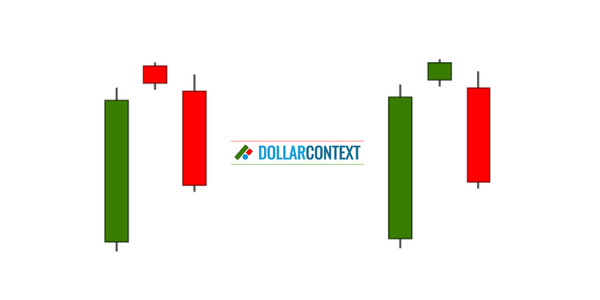
In this tutorial, we explore the evening star, a three-candle formation found in the rich tapestry of Japanese candlestick charting techniques.

CANDLESTICK
In this tutorial, we explore the evening star, a three-candle formation found in the rich tapestry of Japanese candlestick charting techniques.
CANDLESTICK
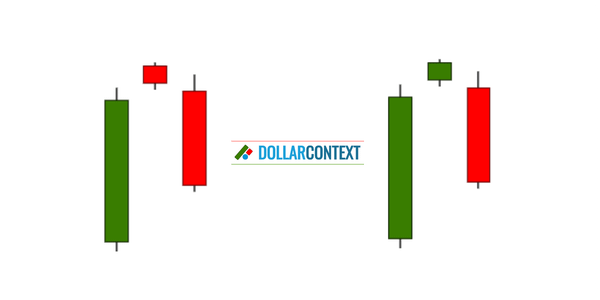
This article covers the criteria and conditions to qualify an evening star pattern as a reversal indicator.
CANDLESTICK
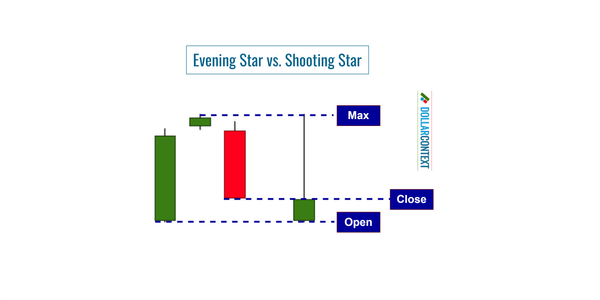
The configuration of an evening star has resemblances to other candlestick patterns, including the shooting star, the tower top, and the doji.
CANDLESTICK
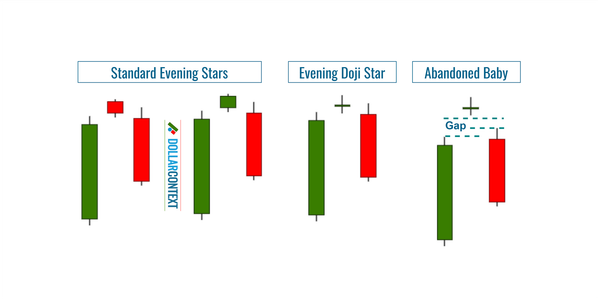
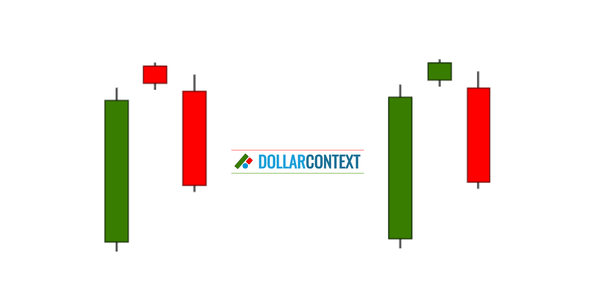
We can distinguish three primary types of evening stars: standard evening star, evening doji star, and abandoned baby top.
CANDLESTICK
While the evening star can serve as a useful instrument for traders, it's important to keep in mind its limitations and the skepticism that surrounds this pattern.
CANDLESTICK
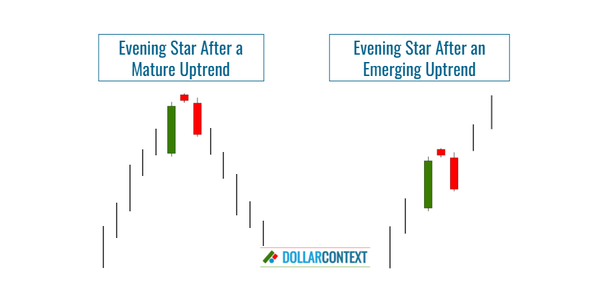
We discuss the implications of the evening star pattern in different market scenarios, including uptrends and lateral movements.
CANDLESTICK
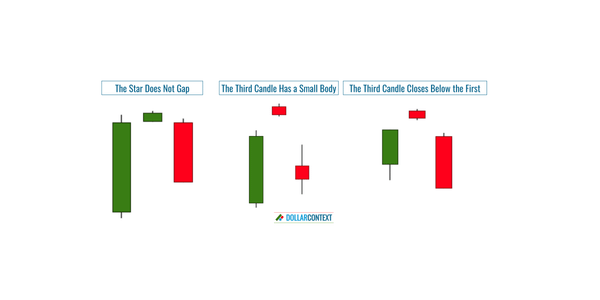
In real-world trading, variations of the evening star that may not perfectly align with the ideal form can still be valid, given certain market conditions.
STOP-LOSS
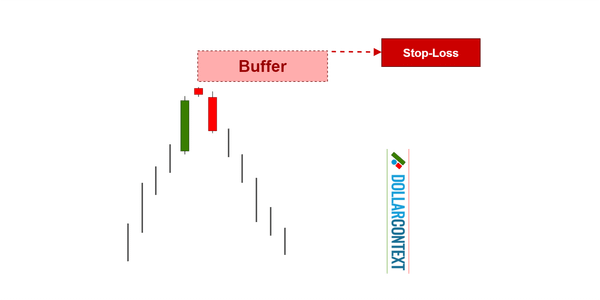
In this post, we'll explore effective strategies to set a stop-loss when using an evening star pattern to initiate a short position.
CANDLESTICK
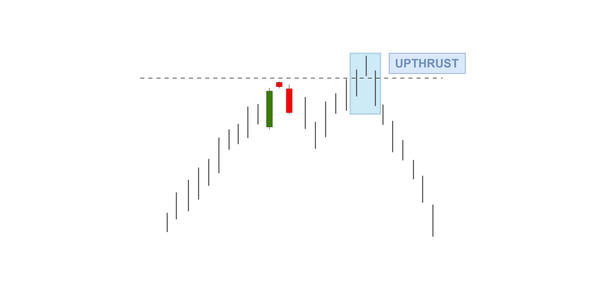
After an uptrend, the price range associated with an evening star becomes resistance.
CANDLESTICK
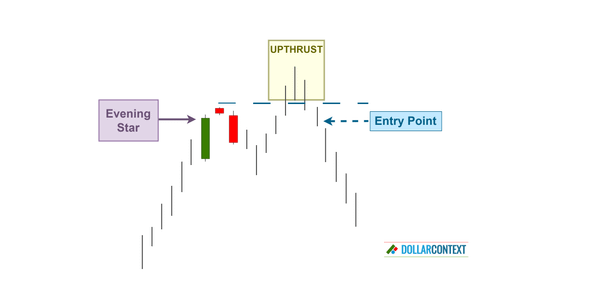
In this article, we'll discuss the different options for entry points after the emergence of an evening star pattern.

CANDLESTICK
The psychology behind an evening star pattern reveals a shift in market sentiment from bullish to bearish, usually occurring after an uptrend.
CANDLESTICK
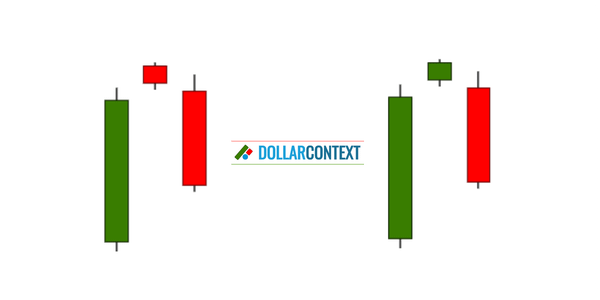
In this article, we'll explore the layout of an evening star pattern in Japanese candlestick analysis and how to identify this reversal indicator.